Registered Agent for an LLC: Requirements and Duties
Updated September 2026
A registered agent is the person or company designated to receive legal papers and official state notices for an LLC. Every LLC must maintain a registered agent in each state where it is formed or registered to do business.
The registered agent is not the LLC’s owner, lawyer, tax preparer, or compliance manager unless a separate agreement gives that person those roles. The agent’s basic legal role is to accept documents and forward them to the LLC.
What Does a Registered Agent Do?
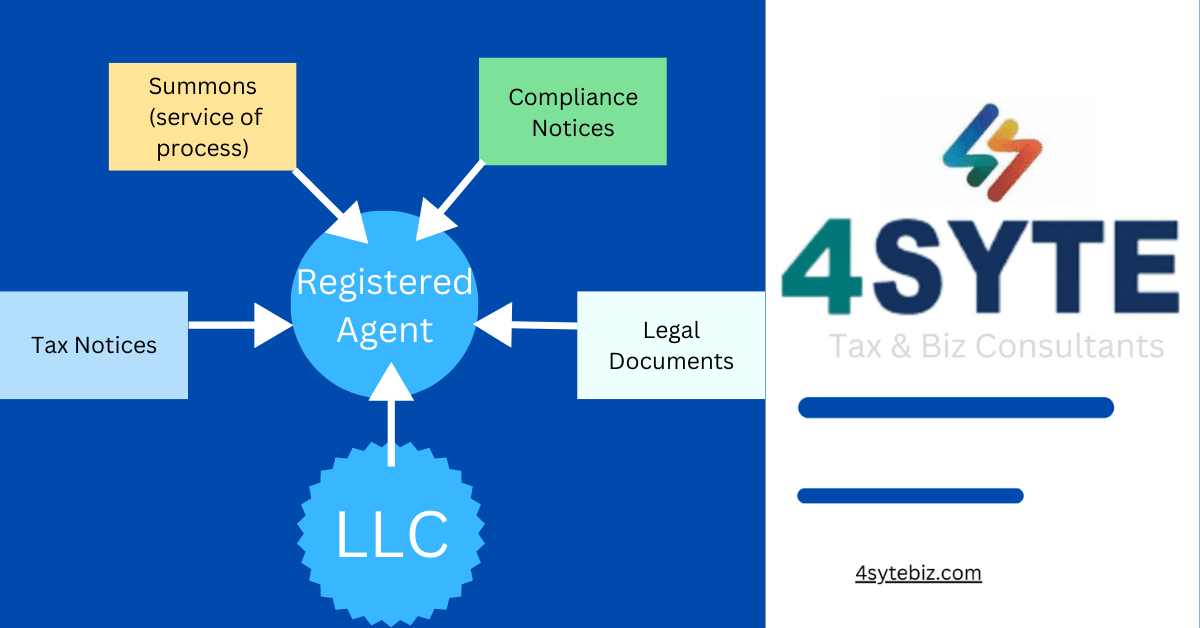
A registered agent receives documents delivered to the LLC at its registered office. These normally include:
- service of process when the LLC is sued;
- notices from the Secretary of State or another state agency;
- annual-report or state-fee reminders;
- tax notices sent by a state authority; and
- other official correspondence addressed to the LLC.
The agent must forward these documents promptly to the LLC’s current contact. A missed lawsuit or government notice can lead to a default judgment, penalty, loss of good standing, or administrative dissolution.
Registered Agent Requirements
Exact rules differ by state. The following requirements are common:
- The agent must have a physical street address in the state.
- The address must be a real location where documents can be delivered. A P.O. box alone does not qualify.
- An individual agent must meet the state’s residency and age requirements.
- A company acting as agent must be authorized to provide the service in that state.
- The agent must be available at the registered office during the hours required by state law.
Always check the law of the specific state. For example, Delaware requires every LLC to maintain a registered office and registered agent in Delaware. Wyoming requires a registered agent to maintain a physical Wyoming address.
Can an LLC Owner Act as the Registered Agent?
In many states, an LLC member or manager can serve as the registered agent if that person satisfies the state requirements. The LLC itself can also act as its own agent in some states. Delaware expressly allows this when the legal requirements are met.
This option does not work well for an owner who lives outside the state, travels often, works from a location that is not open during normal business hours, or does not want a home address in the public record.
Why Foreign Owners Usually Need a Professional Service
A non-U.S. owner who does not maintain a qualifying physical location in the formation state cannot personally perform the role. A professional registered-agent service provides the required in-state address and receives official documents.
The service does not replace the LLC’s business address, mailing address, principal office, tax adviser, or lawyer. It also does not prove that the LLC conducts business from the registered-agent address.
What a Registered Agent Does Not Do
Appointing an agent does not transfer the LLC’s compliance duties. Unless the service agreement says otherwise, a registered agent does not:
- file federal or state tax returns;
- prepare annual reports;
- pay franchise taxes or state fees;
- maintain accounting records;
- provide a bank-verification or operating address;
- renew business licences; or
- give legal or tax advice.
The LLC remains responsible for every filing and payment. Some providers sell additional compliance services. Review the contract so you know exactly what is included.
How to Choose a Registered Agent
Choose a provider based on reliability, not price alone. Confirm the following:
- The provider is authorized to serve in the required state.
- The registered office is staffed as state law requires.
- Legal papers are scanned and forwarded quickly.
- Email and account contact details can be updated easily.
- The renewal fee and extra charges are clear.
- The provider has a process for urgent service of process.
- You can obtain proof of appointment when a bank or other institution requests it.
Keep the provider informed of every change to the LLC’s contact person, email address, telephone number, and mailing address.
Changing a Registered Agent
An LLC can change its registered agent. It must file the required change with the state and pay any filing fee. The new agent must consent when state law requires it.
Do not cancel the current service before the state accepts the change. Otherwise, the LLC can be left without a valid agent.
What Happens If the LLC Loses Its Registered Agent?
The consequences depend on state law. The state can reject filings, assess penalties, revoke the LLC’s good standing, or administratively dissolve or cancel the entity. The LLC can also miss a lawsuit or other time-sensitive notice.
If an agent resigns, appoint a replacement within the state deadline. Delaware law, for example, provides a 30-day replacement period after the agent’s resignation filing before an LLC’s certificate of formation can be cancelled.
Registered Agent and Foreign Qualification
An LLC formed in one state can also need registration in another state where it conducts business. This is called foreign qualification. The LLC must appoint a registered agent in each state where it is registered.
Having an agent in a state does not by itself mean that the LLC is qualified to do business there. Foreign-qualification requirements depend on the LLC’s activities and the law of that state.
Frequently Asked Questions
Is a registered agent required for an LLC?
Yes. An LLC must maintain a registered agent in its formation state. It must also maintain one in each additional state where it registers to do business.
Can I use a P.O. box?
No. A P.O. box alone does not satisfy the physical-address requirement. State law requires a street address where documents can be delivered.
Can a registered-agent address be used as the LLC’s business address?
Only if the provider permits it and the address truthfully serves that purpose. The registered office is primarily for legal and official documents. Banks, payment processors, tax agencies, and licensing authorities can require a separate principal, physical, or mailing address.
Does a registered agent keep an LLC compliant?
No. The agent receives and forwards documents. The LLC remains responsible for reports, taxes, licences, records, and other obligations unless it separately hires the provider to complete specific work.
Can a foreign person form a U.S. LLC and use a professional agent?
Yes. U.S. citizenship or residence is not generally required to own an LLC. The LLC must still meet the formation state’s registered-agent rules and all applicable federal, state, and local requirements.
Does changing the registered agent change the EIN?
No. A change of registered agent does not create a new entity and does not change the LLC’s EIN.
Get Help With LLC Formation and Compliance
4SYTE helps U.S. and foreign owners form LLCs, arrange registered-agent service, and understand the filings that follow formation.
Learn about our LLC formation service or contact us to discuss your LLC.